
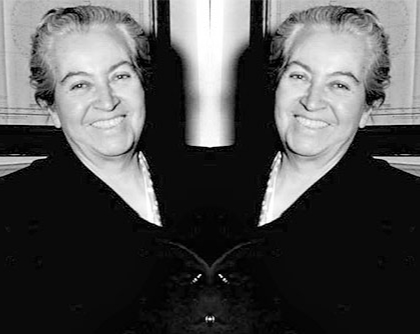
To mark International Book Day, the Centro Social de Mayores (CSM) in London invited me once again in 2011 to give a talk. That year I spoke to them about Gabriela Mistral, the great Chilean poet, who began her career as a teacher, went on to become a diplomat, won the Nobel Prize in Literature in 1945 for her poetry, and was a woman of immense sensitivity in every respect.
Below, I have reproduced the text of my talk, which you can also download here as a PDF.
That year was the first time it was also recorded on video, and I’ve uploaded it here (part 1, part 2 and part 3).
Gabriela Mistral: A Woman Who Loved
Toggle
GABRIELA MISTRAL: A WOMAN WHO LOVED
A tribute to Artur Nils Lundkvist,
Laura Rodig, Palma Guillén and Doris Dana
1. INTRODUCTION
Gabriela Mistral was the first woman in history to be awarded the Nobel Prize in Literature for her poetry, specifically in 1945, and the first person from Latin America to receive this honour.
This tribute to Gabriela Mistral is divided into four parts (Gabriela the teacher, Gabriela the diplomat, Gabriela the poet and her legacy), in which we shall attempt to focus solely on one aspect of her poetic output: that of the Gabriela who loved and, tangentially, the modern mystical Gabriela.
2. BODY
2.1. Gabriela the Teacher: She loved the boys and girls she taught and fought for a less tragic future for them
Gabriela Mistral is the literary pseudonym of a woman born Lucila de María del Perpetuo Socorro Godoy Alcayata. She adopted this pseudonym from a writer she adored: Frédéric Mistral, a writer from the south of France, who won the Nobel Prize in Literature in 1904 and was a man of extreme sensitivity who waged a passionate political and linguistic struggle to dignify his language, Occitan.
Gabriela was born in Vicuña, in the province of Elqui, Coquimbo Region, towards the centre of the long strip that is Chile, on 7 April 1889. In Vicuña, there is still a museum in the house where she was born.
Gabriela began working as an assistant teacher at the age of 16, in 1904, at the Escuela de la Compañía Baja in La Serena. From 1908 onwards, she worked as a teacher in the village of La Cantera and later in Los Cerrillos, on the road to Ovalle. And she was a teacher, even though she had not studied, as she could not afford to do so. She was another self-taught figure, like Miguel Hernández.
Later, in 1910, aged 22, she had her knowledge recognised by the Escuela Normal No. 1 in Santiago and obtained the official title of State Teacher, which enabled her to teach at secondary level. This earned her the enmity of her colleagues, as she had received this title through the recognition of her knowledge and experience, without having attended the Pedagogical Institute of the University of Chile. Gabriela soon began to arouse envy amongst the male-dominated educational circles around her. And no one has encapsulated the commandments by which teachers should be guided quite as well as Gabriela did in her ‘Teacher’s Decalogue’.
THE TEACHER’S DECALOGUE
LOVE: If you cannot love deeply, do not teach children
SIMPLIFY: To know is to simplify without detracting from the essence.
PERSIST: Repeat, just as nature repeats species until perfection is achieved.
TEACH: With an eye for beauty, for beauty is the mother of all things.
TEACHER: Be passionate. To light lamps, you must carry fire in your heart.
BRING YOUR CLASS TO LIFE. Every lesson should be as alive as a living being.
DEVELOP YOURSELF: To give, you must have plenty.
REMEMBER: Your profession is not a commodity; it is a divine service.
BEFORE you deliver your daily lesson, check that your heart is pure.
REFLECT: on the fact that God has entrusted you with the task of creating the world of tomorrow.
Gabriela lived and taught throughout Chile, from Antofagasta in the far north to the port of Punta Arenas in the far south, where she ran her first secondary school and breathed new life into the town. In 1921, aged 32—the same age at which Miguel Hernández died in a Francoist prison in Alicante—Gabriela Mistral was seeking a new challenge, having previously headed two secondary schools of appalling standard. She sat the competitive examination and won the prestigious post of headmistress at Secondary School No. 6 in Santiago, but the teachers did not welcome her, criticising her for her lack of formal teaching qualifications.
Perhaps it was this feeling of being misunderstood and scorned by the envious men around her that ultimately drove Gabriela to leave her beloved native Chile behind, going on to become a distinguished educator beyond Chile’s borders. And so, on 23 June 1922, Gabriela Mistral set sail for Mexico on the steamship Orcoma, at the invitation of the then Mexican Minister of Education, José Vasconcelos. She remained there for almost two years, working alongside the most prominent intellectuals in the Spanish-speaking world at that time. From there, she travelled to other countries in Latin America, such as the Dominican Republic, Cuba and Nicaragua, as well as the US and Europe, studying the schools and educational methods in these countries.
2.2. Gabriela the Diplomat
She alternated these journeys as a ‘Teacher of the World and for the World’ with her early forays into diplomacy. Thus, in the mid-1920s, following a tour of the United States and Europe, she returned to Chile, where the political situation was so tense that she was forced to leave again, this time to serve in Europe as secretary to one of the sections of the League of Nations in 1926. That same year, she took up the post of secretary at the League of Nations’ Institute of International Cooperation in Geneva.
In 1933, Gabriela Mistral formally began her diplomatic career and worked, for a period of twenty years, as Chile’s consul in cities across Europe and the Americas, one after the other. Behind this phase, at least in its early stages, one can see the helping hand of Pedro Aguirre Cerda, who was originally a teacher, having qualified in Chile and obtained a doctorate at the Sorbonne; whom Gabriela met in 1916; to whom Gabriela dedicated her collection of poems *Desolación*; who was inspired by Gabriela to write *The Agrarian Problem* (1929), a book dedicated to her; who had returned permanently to Chile from exile in 1930; and who served as President of Chile between 1938 and 1944.
Gabriela Mistral began her diplomatic career as a female consul in Madrid between July 1933 and October 1935. She was then appointed Consul in Lisbon in October 1935, a post she held until May 1936, when she was appointed Consul in Oporto. She served in Guatemala between November 1936 and December 1938 as Honorary Consul-General, and in Nice from December1938 a January 1940. In January 1940, she was posted to Niterói (a city in the state of Rio de Janeiro, Brazil). In January 1941, she moved to Petrópolis (a city in the same Brazilian state), where she received the news of the Nobel Prize in 1945.
At the end of 1945, she returned to the United States, this time as Consul-General in Los Angeles (USA), and, with the money she had won from the prize, she bought a house in Santa Barbara (USA), where she was posted as Consul in 1947. In June 1950, she was appointed Consul in Veracruz (Mexico) and, from November 1950, served first as Consul and later as Consul-General (from October 1951) in Naples. In December 1952, she was appointed Consul in Florida (USA). And from August 1953, she served as Deputy Consul in New York, a post she held until her death in 1957.
2.3. Gabriela the Poet: Queen of Ibero-American Literature and a Woman Who Loved
2.3.1. Gabriela the Poet: Queen and Ambassador of Ibero-American Literature
On 12 December 1914, he won first prize in the literary competition of the Juegos Florales, organised by the Federation of Students of the City of Chile (FECh) in Santiago, for his “Sonetos de la Muerte”.
This poem is included in his first collection, *Desolación*, which appeared in New York in 1922 and was published by the Instituto de Las Españas, on the initiative of its director, Federico de Onís. In my opinion, it is his masterpiece. However, despite being a book produced with the best of intentions by the director of the Instituto de las Españas, with a sincere desire to introduce her to the world, I believe it lacks coherence and logic in its structure.
In 1924, two years later, when Gabriela was 33, her second collection of poems, *Ternura*, was published. At1938, a the age of 49, she published *Tala*, her third collection of poems. And at1954, a the age of 65, she published her fourth and final collection of poems: *Lagar*.
Between her third and fourth collections, on 10 December 1945, at the age of almost 57, she was awarded the Nobel Prize in Literature by King Gustav V of Sweden. She was the fifth woman in the history of the Nobel Prize in Literature, since the awards began in 1901, to receive it [the four who preceded her were: the Swedish writer Selma Lagerlöf in 1909; the Italian writer Grazia Deledda in 1926; the Norwegian writer Sigrid Undset, born in Denmark, in 1928;and the American Peral S. Buck, who was brought up in China, in 1938], but she was the first woman to receive it solely for her poetry; specifically, as stated at the award ceremony: ‘for her lyric poetry which, inspired by powerful emotions, has made her name a symbol of the idealistic aspirations of the whole of Latin America’.
Gabriela was the first person from Ibero-America to win the Nobel Prize in Literature. The fact that this first person was a woman was something many men never forgave her for. At the award ceremony, she was called the ‘queen of Latin American literature’. Given that the term ‘Latin American’ is a Gallicism coined by the French in an attempt to mark their influence in the Americas, the term ‘Ibero-American’ is preferred; that is why I refer to her in this epigraph as the ‘Queen of Ibero-American Literature’, in honour of that Ibero-American community, which unites us with Iberia and the Americas, and which has been taking shape since the early 1990s, in the true spirit of Mistral, under the umbrella of the Ibero-American Summits: the First in 1991 in Guadalajara, Mexico—the country where Gabriela was most highly and most justly revered; and the Sixth in 1996 and the Seventeenth in 2007 in her native Chile. And having spent half her life as a diplomat – she who was Consul-General but never Ambassador – she would have been delighted to have been called the ‘Ambassador of Ibero-American Literature’, which is what I firmly believe she was.
We would also like to pay a heartfelt tribute here to Artur Nils Lundkvist (1906–1991), a Swedish poet and writer, a full member of the Swedish Academy since 1968, a staunch pacifist during the harsh Cold War, and the man who translated, having taught himself Spanish and French using dictionaries, all the great writers into Swedish, thanks to which the Academy went on to award them the Nobel Prize. In 1936, together with his wife, the Swedish poet María Wine, he had visited Spain and Ibero-America. What few people know is that he was the first to translate Gabriela Mistral into Swedish and that it was thanks to his translation and his efforts that Gabriela Mistral won the Nobel Prize; for translators, even if they are self-taught like this gentleman, can work miracles and bridge chasms. Both Gabriela and Artur shared the traits of being poets, pacifists and spiritual individuals. Pablo Neruda, Gabriel García Márquez and Camilo José Cela all expressly thanked him for her Nobel Prize. In fact, since his death in 1991, no one else translated into Swedish for a long time, which is why it took ten years for a Spanish-speaking writer to be awarded the Nobel Prize again. I am grateful to Gerardo Hernández Roa, a Chilean professor who has been based in Sweden since the 1980s, for the information on Lundkvist.
2.3.2. Gabriela: A Great Woman Who Loved Everyone, and All People, and the Whole of Humanity
2.3.2.1. Gabriela Loved Men
We shall discuss here three men by name. The love Gabriela professed for them is difficult to categorise, as none was her official husband. That said, the three share a common thread: all three took their own lives.
2.3.2.1.1. Romelio Ureta: her youthful love
And although Gabriela Mistral was very private about her personal life and little is known of the loves and heartbreaks she experienced, many scholars do point out that behind ‘Desolación’ lies a profound heartbreak. Specifically, behind ‘Sonetos de la Muerte’ (Sonnets of Death)—her first award-winning poem and one included in her debut collection *Desolación*—there was a man. This is confirmed by a study by Ana María Cuneo featured in the *Anthology on Gabriela Mistral*, published in 2010 by the 22 Academies of the Spanish Language as a commemorative volume. Ana Cuneo states in her essay – and I quote verbatim –: “Lucila met Romelio Ureta in 1906 in La Serena, where he was working on the railways… Shortly afterwards, they met at a boarding house in La Cantera where she was a teacher… In November 1909, Ureta took his own life due to financial difficulties.”
And we know that the poem ‘Sonetos de la Muerte’ won a prize in 1914, but because of the haste with which ‘Desolación’ was published, we do not know the exact year in which that poem was written; however, it may well have been after Romelio’s suicide in 1909.
In 1914, when this poem won the prize, Miguel Hernández was only four years old, but perhaps he read it. It is so reminiscent of his ‘Elegy for Ramón Sijé’! We shall never know for certain whether Gabriela inspired it, but whilst there were roses in La Serena, in Alicante there were almond trees in bloom:
SONNETS OF DEATH
I
From the icy niche where men laid you,
I shall bring you down to the humble, sun-drenched earth.
That I am to sleep there, men did not know,
nor that we shall dream upon the same pillow.
I shall lay you down on the sunlit earth with a
mother’s tenderness for her sleeping child,
and the earth shall become a cradle of tenderness
as it cradles your aching child’s body.
Then I shall scatter earth and rose petals,
and in the pale blue, wispy moonlight,
the light remains will be held captive.
I shall walk away, singing of my beautiful acts of vengeance,
for to that hidden depth no hand
shall reach down to wrest your handful of bones from me!
II
This long weariness will grow greater one day,
and the soul will tell the body that it no longer wishes to
dragging its mass along the rosy path,
along which men walk, content to live…
You will feel them digging vigorously beside you,
that another sleeper is arriving in the quiet city.
I shall wait until they have covered me completely…
and then we shall talk for an eternity!
Only then will you know why it does not ripen,
why your flesh is still too tender for the deep, hollow bones,
you had to go down, without weariness, to sleep.
Light will shine upon the dark realm of the sinuses;
you’ll know that in our bond there was a sign of the stars
and, the great pact broken, you had to die…
III
Evil hands took your life from the day
when, at a sign from the stars, you left your
of snow-white lilies. It flourished in joy.
Evil hands tragically intruded upon it…
And I said to the Lord: ‘Along the mortal paths
they are leading him. Beloved shadow whom they know not how to guide!
Snatch him away, Lord, from those fateful hands,
or plunge him into the long sleep that You alone can grant!
I cannot call out to him, I cannot follow him!
His boat is driven by a black storm wind.
Bring him back into my arms, or you will cut him down in his prime.’
The pink boat of his life came to a halt…
Do you say I know nothing of love, that I showed no mercy?
You who are about to judge me, you understand, Lord!
2.3.2.1.2. Stefan Zweig: his great friend
Stefan Zweig – the son of Jewish parents, an Austrian writer born in Vienna, one of the most lucid writers of interwar Europe, although his books were banned by the Nazis in 1936, and a great friend of Gabriela’s – had also been living in Petrópolis since 1941, having arrived there with his second wife, Charlotte Elisabeth Altman, whilst fleeing the German Nazis. On 22 February 1942, Stefan and his wife, in despair at the thought that the Nazis would take over the world, took their own lives in Petrópolis.
2.3.2.1.3. Juan Miguel Pablo Godoy Mendoza: his adopted son: HIS SON
Affectionately known as ‘Yin yin’, this boy must have been born between May and June 1925. The family tree available online shows that he was the son of Gabriela’s first cousin, Carlos Godoy, who was a merchant seaman, and Marta Mendoza, who had died in Geneva in 1926. Gabriela Mistral adopted him in Barcelona in March 1926 and raised and loved him as her own son. From then on, the boy followed her around the world. On 14 August 1943, whilst Gabriela was in Petrópolis (Brazil), her son took his own life, having just turned 18. This was the third suicide of someone dear and close to Gabriela in the space of a year and a half. The following poem, ‘La abandonada’ (‘The Abandoned One’), included in her collection *Lagar*, may well have been written in the wake of that suicide and is dedicated to ‘Emma Godoy’ – probably another of her cousins, the sister of the boy’s biological father and Yin Yin’s aunt.
THE ABANDONED ONE
Now I am going to learn
the land of bitterness,
and to unlearn your love
which was my only language,
like a river that has forgotten
its bed, its current and its banks.
Why did you bring treasures
if you were not to bring forgetfulness?
Everything is superfluous to me, and I am superfluous
like a festive gown for a party that never was;
so much so, my God, that I am surplus to requirements
my life has been superfluous from the very first day!
Give me now the words
that my wet nurse did not give me.
I shall stammer them madly
syllable by syllable:
the word ‘plunder’, the word ‘nothing’,
and the word ‘end’,
even if they twist in my mouth
like bitten vipers!
I have sat down in the middle of the Earth,
my love, halfway through life,
to open my veins and my chest,
to peel myself like a living pomegranate,
and to shatter the red mahogany
of my bones that loved you.
I am burning what we had:
the thick walls, the high beams,
prying open, one by one,
the twelve doors you used to open
and blinding, with blows of the axe,
the cistern of joy.
I shall scatter, in a flurry,
the harvest gathered yesterday,
to empty wineskins
and set captive birds free;
to shatter, like my body,
the walls of the ‘farmhouse’
and to measure with outstretched arms
the heap of ashes.
How it hurts, how hard it is,
how divine things used to be,
and they do not want to die, and they lament as they die,
and lay bare their living innards!
The logs understand and speak,
the wine, rising up, looks on
and the flock of birds rises
clumsily and in disarray like mist.
Let the wind come; let my house burn
better than a forest of resin;
let the mill and the mother tower
the mill and the godmother’s tower.
My night, hastened by the fire,
may my poor night never see the light of day!
And a great youthful love who takes her own life, like Romelio’s; plus the suicide of a close friend, a writer, and his wife; plus the suicide of her adopted son – all of this inevitably leaves deep scars. And it’s not as though she sought it out; it’s simply that there are people who, unfortunately, are forced to live particularly hard lives. The vagaries of fate. A fateful destiny. And Gabriela’s was one of them.
2.3.2.2. Gabriela Loved Women
We shall discuss here three women by their full names. The love Gabriela felt for them is difficult to categorise, as none was her official wife. That said, the three share a common thread: all three were vital companions to her and supported her.
2.3.2.2.1. Laura Rodig
Following the suicide of her first love, Gabriela was no longer accompanied on her travels and life’s journey by many men; instead, she preferred to surround herself with the healing affection of women. The first woman whose full name is recorded is Laura Rodig. Gabriela had met Laura Rodig in Punta Arenas in 1918. Laura followed Gabriela to Mexico in 1922 aboard the Orcota.
Whilst she was still alive, Gabriela dedicated the opening poem of *Desolación* to the woman who was, at that time, probably sharing her life with her: Laura Rodig. And that is the crux of the matter: sharing one’s life. This poem opens the first of the eight parts into which *Desolación* is divided. A first part entitled ‘Life’.
RODIN’S THINKER
With his chin resting on his rough hand,
the Thinker remembers that he is flesh of the bone,
fatal flesh, laid bare before destiny,
flesh that hates death, and trembled with beauty.
And he trembled with love, all his fiery springtime,
and now, in autumn, is truly drowned in truth and sadness.
The thought ‘we must die’ crosses his brow,
in sharp bronze, as night begins.
And in anguish, his muscles split, suffering.
Every furrow in his flesh fills with terror.
It splits, like an autumn leaf, before the mighty Lord
who calls to him from the bronzes… And there is no twisted tree
bathed in sunlight on the plain, nor a lion with a wounded flank,
as tense as this man who ponders death.
2.3.2.2.2. Palma Guillén
Palma Guillén was another of Gabriela’s friends. Gabriela dedicated her third collection of poems, *Tala*, published in 1938, to her. The exquisite dedication in that book reads as follows: ‘To Palma Guillén, and through her, to the compassion of Mexican women’. It is known that Palma adopted Gabriela’s son and that the two of them raised him together. And they were both in Petrópolis when the young man took his own life.
2.3.2.2.3. Doris Dana
The last companion to be by Gabriela’s side from 1946 until her death in 1957—that is, during the last eleven years of her life—was Doris Dana, who was also the one who preserved her most valuable legacy. When they met, Doris was 26 and Gabriela 57, a difference of 31 years.
Doris was another remarkable woman: the first professional of her kind to draft a re-education programme for post-war Germany in 1945. This was the same year that Gabriela won the Nobel Prize.
Mistral’s most important legacy is the one that Doris Dana tirelessly compiled, particularly once she realised that Gabriela was slipping away. Even at that time, Doris Dana was aware not only that Gabriela Mistral’s life was finite due to the diabetes and heart problems she suffered from, but also that Gabriela would one day be a figure of great significance.
For this reason, in the early 1950s, Doris began keeping a meticulous record of every conversation she had with the poet. Furthermore, she collected her letters and thousands of literary essays which, having been written by a woman of such great vision and sensitivity, are true gems.
When Gabriela died at Hempstead Hospital in New York on 10 January1957 a from pancreatic cancer, with Doris Dana by her side, Gabriela knew that her legacy was in the hands of the finest executor in the world. That legacy, built with love, by and for love, was safeguarded by Doris until her death in November 2006.
2.3.2.2.4. Speculation about lesbianism
There has been much speculation as to whether Gabriela Mistral was a lesbian at a time when lesbianism and homosexuality were poorly understood.
Nowadays, at least in Europe, such speculation is a thing of the past. In Spain, the historic Law 13/2005 of 1 July, amending the Civil Code regarding the right to marry, made it the third European country, after Belgium and the Netherlands, to authorise lesbians and gay men to marry, should they so wish. In terms of civil rights, it was a veritable revolution – a fantastic revolution.
And what did Gabriela do in bed – if indeed she shared it – with the women who were part of her life? Well, she did whatever took her fancy. If Gabriela and Doris, or Gabriela and Palma, or Gabriela and Laura did anything in their spare time that could be described as promiscuous, that was their business.
Although during Gabriela’s lifetime there were rumours in Chile about her alleged lesbian relationship with Doris—and it is said that these rumours reached Gabriela’s ears and that, hurt by them, she decided never to settle in her homeland again, preferring to remain in the United States—what is certain is that Doris denied, until the end of her days, that a lesbian relationship had ever existed between them.
For this reason, the book published in Chile in 2009 about Doris and Gabriela is considered disgraceful. That book is entitled *Niña Errante* and was published by the Chilean publishing house Lumen, with a transcription, foreword and notes by Pedro Pablo Zegers, curator of the Writers’ Archive at the National Library of Chile, based on 250 letters that Zegers selected from the correspondence between Gabriela and Doris, the very correspondence that Doris had honourably preserved until her death and which had not reached Chile until late 2007. That book can be regarded as an affront to dignity, if only because it allows these quotes to be plucked from the words Gabriela addressed to Doris—quotes which, since 2009, have flooded the seedy corners of the internet: “Doris, I am in the United States for you”; ‘I am yours in every corner of the world and in heaven’; and ‘Perhaps it was sheer madness to give in to this passion’.
And to attempt to demonstrate this point, a poem by a great Dominican poet is reproduced below; she is a university lecturer at the ‘la Universidad Autónoma ’ in Santo Domingo (UASD); mother of two daughters and grandmother of four grandchildren; a lesbian for some time now; and someone who has published in lesbian anthologies. In her poem “Women…” from the collection “Magical Ecstasy”, one can appreciate the difference in tone between Gabriela’s “Love of the Mother of the World” and Nelsy Aldebot Reyes’s “Love of the Woman of the World”.
WOMEN…
Beautiful women
full of fire and vigour
with large, sensual eyes
playing at the dance of love
dancing freely
taking flight…
Inner fire
freedom to flow
together, alone, with others…
Dancing women, lovers
whirling
in a magical dance of scarves
hair, hips…
Flying, floating,
without hindrance
without stumbling
no limits…
Erotic dream
exotic fantasy
flowing with the sea and the wind
gathering earthly energy
transforming me into
a rich, beautiful
erotic, sensual…
2.3.2.3. Gabriela Loved All Women
But Gabriela did not merely love two or three women; rather, she loved and understood all the women in the world, as is made clear in ‘Poems of the Saddest Mother’.
POEMS OF THE SADDEST MOTHER
CAST OUT
My father said he would cast me out; he shouted at my mother that he would cast me out this very night.
The night is warm; by starlight, I could walk to the nearest village; but what if the baby is born in the next few hours? My sobs may have woken the baby; perhaps the baby wants to come out to see my tear-stained face. And the baby would shiver in the bitter air, even if I wrapped the baby up.
WHY DID YOU COME?
Why did you come? No one will love you, though you are beautiful, my son. Though you smile sweetly, like other children, like the youngest of my little brothers, no one but I will kiss you, my son. And though your little hands wave about in search of toys, you will have nothing for your games but my bosom and the thread of my tears, my son.
Why did you come, when the one who brought you hated you the moment he felt you in my womb?
But no! You came for me; for me who was alone, alone even when he held me tight in his arms, my son!
And this ‘Poems of the Saddest Mother’, which is the second part of the ‘Poem of the Mothers’, has a subtext which—as the word did not yet exist at the time—Gabriela modestly called, as she did with all her work, a ‘note’, and which explains the poem’s genesis.
NOTE.— One afternoon, whilst strolling along a squalid street in Temuco, I saw a local woman sitting at the door of her shack. She was about to give birth, and her face betrayed a deep bitterness.
A man walked past her and said something cruel to her, which made her blush.
At that moment, I felt the full solidarity of our shared gender, the infinite compassion of one woman for another, and I walked away thinking:
-It is one of us who must speak (since men have not done so) of the sanctity of this painful and divine state. If the mission of art is to beautify everything, in boundless mercy, why have we not purified this, in the eyes of the impure?
And I wrote the poems that precede this, with an almost religious intention.
Some of those women who, in order to remain chaste, need to turn a blind eye to the cruel yet inevitable reality, made a petty criticism of these poems, which saddened me on their own account. They even suggested that I remove them from a book.
In this self-centred work—diminished in my own eyes by that very self-centredness—such human prose may well be the only thing in which Life in its entirety is celebrated. Should I have removed them?
No! Here they remain, dedicated to women capable of seeing that the sanctity of life begins with motherhood, which is, therefore, sacred. May they feel the deep tenderness with which a woman who nurtures other people’s children upon this Earth looks upon the mothers of all the children in the world!
The first part of ‘Poems of the Mothers’ consists of 17 poetic micro-stories, amongst which we wish to highlight ‘To the Husband’, written by a woman who decided never to marry, and who could well teach all the men in the world how a woman truly wishes to be loved by her husband during pregnancy.
TO THE HUSBAND
Husband, do not hold me tight. You brought it up from the depths of my being like a water lily. Let me be like still water.
Love me, love me a little more now! I, so small!, will double you along the paths. I, so poor!, will give you other eyes, other lips, with which you will enjoy the world; I, so tender!, will split open like an amphora for love, so that this wine of life may flow from me.
Forgive me! I am clumsy on my feet, clumsy in pouring your cup; but you have filled me thus and given me this strangeness with which I move amongst things.
Be sweeter to me than ever before. Do not stir my blood anxiously; do not agitate my breath.
Now I am but a veil; my whole body is a veil beneath which lies a sleeping child!
2.3.2.4. Gabriela Loved All Peoples
As a prime example of the fact that Gabriel always possessed political awareness and loved all of humanity, we wish to highlight a poem she wrote ‘To the Hebrew People’ following the massacres in Poland, included in her collection of poems *Desolation*, which is, unfortunately, also undated.
TO THE HEBREW PEOPLE
Jewish race, flesh of sorrows,
Jewish race, river of bitterness:
like the heavens and the earth, enduring
and still grows your forest of cries.
Your wounds have never been allowed to heal;
they have never allowed a shadow to be cast over you
to wring out and renew your bandage,
any more than any blushing rose.
The world has been lulled by your moans.
And I play with the strands of your tears.
The furrows on your face, which I love so much,
are as deep as wounds cut by a saw.
Trembling, the women rock their child,
trembling, the man reaps his sheaf.
A nightmare has taken root in your dreams
and your only word is ‘miserere’!
Jewish people, and yet you still have the heart
and a voice as sweet as honey, to praise your hearths,
and to recite the Song of Songs
with tongue, lips and heart in tatters.
Mary still walks within your wife.
The likeness of Christ is upon your face;
on the slopes of Zion they have seen him
calling out to you in vain, as the day draws to a close…
Your sorrow gazed upon Him in Dimas
and He spoke to Dimas those profound words
and, to anoint his feet, she seeks
of Mary Magdalene—and finds it stained with blood!
O Jewish people, flesh of sorrows,
Jewish race, river of bitterness:
like the heavens and the earth, endure
and ever-growing is your vast forest of cries!
It is said that Dana Doris was Jewish. If that is true, it must have been a Jewish woman who helped to honour her legacy.
2.4. Gabriela: Artist and Modern Mystic
2.4.1. Gabriela, the Artist
Gonzalo Rojas is one of the few authors who not only forgives Gabriela for her ‘bad taste’ in talking about intimate and personal matters, but also praises her for it. Gonzalo has said, in his ‘ ’ on Gabriela in the ‘Antología de las Academias’, that what characterises Gabriela is: ‘sincerity of feeling, an emotional wrench, almost Quevedian… visionary… austerity at the heart of great pathos… the volcanic and even the frenetic, yet at the same time rigour… she was not dazzled by the avant-garde but rather took her time listening to the spoken language of her fellow countrymen in the Americas, with its archaisms and murmurs, like Teresa of Ávila, and thus she revealed the world to us, somewhere between the seer and the disdainful.”
Gabriela was an Artist with a capital ‘A’, for she conceived and revered art free from commercialism. Only a great soul can bequeath to us the following ‘Artist’s Decalogue’, section ‘IV’ (Roman numerals), from her poem ‘El Arte’ in the seventh part of ‘Desolación’, a section entitled ‘Prosa’.
THE ARTIST’S DECALOGUE
I. Thou shalt love beauty, which is the shadow of God upon the Universe.
II. There is no such thing as atheistic art. Even if you do not love the Creator, you shall affirm Him by creating in His likeness.
III. Thou shalt not offer beauty as bait for the senses, but as the natural nourishment of the soul.
IV. It shall not be a pretext for lust or vanity, but a divine exercise.
V. You shall not seek it at fairs, nor shall you take your work there, for Beauty is a virgin, and that which is found at fairs is not She.
VI. It shall rise from your heart into your song, having first purified you.
VII. Your beauty shall also be called mercy, and shall console the hearts of men.
VIII. You shall give your work as one gives a child: by drawing blood from your heart.
IX. Beauty shall not be a soporific opium to you, but a fine wine that sets you ablaze for action; for if you cease to be a man or a woman, you shall cease to be an artist.
X. You will emerge from all creation with a sense of shame, for it was inferior to your dream, and inferior to that marvellous dream of God, which is Nature.
2.4.2. Gabriela: Modern Mystic
Perhaps because most men have never understood the mystical and divine side of women, or of other men—those who do use the right side of their brain and not just the rational left half—perhaps that is why they are surprised, as Gonzalo Rojas was, that Gabriela Mistral was so passionate about Amado Nervo and dedicated a posthumous elegy to him entitled ‘In Memoriam’. And Rojas asks himself in *la Antología * (2010), and I quote: ‘What could have fascinated her about him apart from his devotion to the occult and esotericism?’. And I believe that it is precisely because Rojas is incapable of connecting with that mystical side that he allows himself to write such comments. And that is why, despite Rojas being one of the greats of Chilean and Ibero-American literature—a figure on a par with Pablo Neruda—he seems incapable of understanding and revereing feminine mysticism.
Let us not forget that in the original *Desolación*, Gabriela not only praised Nervo’s mysticism, but there was also a beautiful prose poem entitled ‘Comments on Poems by Rabindranath Tagore’; and Tagore was the first non-European man (he was Indian, fromla India ) to win the Nobel Prize in Literature; he won it as early as 1913, whilst no American would win it until 1930 and no African until 1986; and he won that Nobel Prize precisely for his mystical poetry.
Below is a reproduction of his poem ‘The Torment’, which encapsulates his mystical and visionary curse.
THE TORMENT
For twenty years I have been sunk in the flesh
—and the dagger is hot—
an enormous verse, a verse with crests
of the rising tide.
To harbour it submissively, my entrails
weary of its majesty.
With this poor mouth that has lied
Is it to be sung?
The fleeting words of men
lack the warmth
of their tongues of fire, of their living
flickering.
Like a son, nourished by my very blood,
he sustains himself,
and no son has ever drunk more blood from the bosom
a woman’s womb.
A terrible gift! A long, gnawing torment
that makes one howl!
He who came to drive it into my very core
may he have mercy!
To honour the mystical side of Gabriela Mistral, here is a poem by a man who may be considered the greatest Spanish diplomatic poet of all time: the Basque Ramón de Basterra y Zabala.
A ROMANCE
THE ASCETS
Castile, the fiery Thebaid.
With the penitent’s sackcloth
and the pious cord around their waists,
beings of embers, souls of fire,
dwell in mystical tranquillity,
their faces turned towards the heavens.
Fleeing all that is sweet and tender,
they plunge boldly into eternity,
without wife, mother or sister.
The faces of the moon,
the stars of the dark night,
of God’s arcane grandeur.
Of the peace of beautiful souls
and the harmony of the stars,
Christ, the harmoniser, is the agent.
The order of the world as foreseen
is Christ, Christ, Christ, Christ.
Castile, the fiery Thebaid.
And Gabriela, though not from Castile, was ‘a soul of fire’, a ‘mystic’ who ‘fled from all that was sweet and tender’ to denounce the injustices of the world. Gabriela was, above all, the great mystic of the twentieth century in the Castilian Spanish language and, as such, greatly misunderstood.
Nor was Ramón de Basterra a prophet in his own land. He died at the age of forty in a Basque psychiatric hospital in1928.
2.5. Nor was Gabriela—as no woman has ever been in her lifetime—a ‘prophet’ either ‘in her own land’ (Chile) or in her domain (poetry)
Meanwhile, time had been healing the wounds of a turbulent Chile, and by the time Doris Dana died in November 2006 and her niece Doris Atkinson donated Gabriela Mistral’s complete legacy to the Chilean Government—as magic exists and the Americas are magical—by then a woman, another truly great woman, was already President of Chile: Michelle Bachelet.
By the time Gabriela Mistral’s legacy—more than 40,000 documents, lovingly compiled by Doris Dana—arrived in Chile in December 2007, Michelle was already president, and Gabriela’s legacy could be received with the recognition it deserved. That legacy is currently held in the archives of the National Library of Chile.
But to embrace a legacy, as 2007 draws to a close, of a woman who died in 1957, is not the same as honouring her. Nor was it an honour to receive that National Prize for Literature, which was awarded to her in Chile in 1951—reluctantly and belatedly—six years after the Nobel Prize. Nor was that first honorary doctorate awarded to her by the University of Chile in 1954, also reluctantly and belatedly, following the many she had already received by then, starting with the one courageously awarded to her by Mills College in Oakland (California, USA) in 1947, and followed by honorary doctorates from universities in Guatemala, Los Angeles (California, USA) and Florence (Italy), to name but a few of the avalanche that followed the awarding of the Nobel Prize.
Nevertheless, Chile has still not given due recognition to the jewel born from its very heart: Gabriela Mistral; nor has the Ibero-American world, including Spain, despite that ‘Tribute Anthology’ of 2010, full of analyses by leading experts, but in which one misses a table of contents listing not only the experts’ analyses but, above all, Gabriela’s poems.
In contrast, the wider world, the broader world, the non-Ibero-American world—that Scandinavian world, that Anglo-Saxon world, that global world—does know Gabriela’s worth; for despite not speaking Spanish in many cases, and thus missing out on the best of Gabriela, despite all that, they did manage to intuit her, to value her and to honour her as she deserves: with the Nobel Prize in Literature on 10 December 1945.
That same year, 1945, on 2 September, the greatest barbarity humanity had known up to that point had officially come to an end:la Segunda Guerra World War. And who knows whether that Nobel Prize, awarded in 1945 of all years, might not have been an act through which the world was cleansing its ‘karma’ [an Indian concept ofla India – not a Hindu one, as it is shared by Jains and Buddhists – which essentially means ‘outstanding karmic debts’] towards the women of the world for the countless sons and daughters snatched from them during that mad Second World War, by awarding—for the first time inla Historia —a Nobel Prize in Literature to a woman, and what’s more, to a modern mystic who wrote poetry in Spanish and had been a modest consul for only twelve years, yet had been a tremendous teacher and always self-taught. The pinnacle of serendipity.
A private university, one of the first in Chile, has also borne the name of Gabriela Mistral since 1981: the Gabriela Mistral University.
3. CONCLUSION: GABRIELA MISTRAL, THE GREAT TEACHER, CONSUL, WOMAN, POET AND MODERN MYSTIC – ALL IN CAPITAL LETTERS
And I shall conclude with some personal reflections.
So that the honouring of those who deserve to be honoured may never cease, we wished to honour Gabriela Mistral, endeavouring at least to honour her as she deserves, that is to say, without prejudice and with great love.
I feel, and have always felt, a strong connection with Gabriela Mistral. Our lives have been guided by the same four principles I have spoken of so far: being born with a literary calling [her first literary prize was awarded by ‘la FECH ’, mine by the Miguel Hernández Institute in Alicante]; being teachers [I have been a private language tutor since the age of 13, she a teacher from the age of 16]; being diplomats [I have been a diplomat since the age of 26 and my first post abroad was as Spanish Consul in Sofia; she served as Chilean Consul from the age of 44 until her death at 67]; and we are both modern mystics and, as such, both greatly misunderstood by the male-dominated establishment around us – she until 1957, when she was liberated, and I to this very day.
We have also shared a fifth guiding principle. And although it is far less obvious than the previous ones, in my view it is the most fundamental: we have both always had the same objective – to denounce the injustices of the world around us and, through that denunciation, to try to improve our world, the world of everyone. That world which has almost always belonged to everyone, but almost never to all women.
Gabriela sought to do this through her poems. And although her poems were – and remain – of sublime beauty and refinement, precisely because she wrote about, for and on behalf of women, and for the sons and daughters of those women, the so-called ‘clever’ men of her native Chile criticised her very harshly, labelling it ‘in bad taste’ to air the dirty laundry of the hardships faced by women, girls and boys.
And Gabriela Mistral died, shortly before her 68th birthday. And if Life were to grant me such a long life, I would want to do the same as her: to fight and keep fighting, despite the lack of understanding, for the rights of those who have no voice – we who are privileged enough to have one.
And I, as a woman, and as a woman who has suffered greatly; and as a woman who, despite that – or perhaps precisely because of it – is, above all, a freedom fighter, just as Gabriela was, conclude, then, by telling you my opinion of Gabriela: Gabriela Mistral wrote the most beautiful verses anyone has ever written in the Spanish language.
Just as I believe that Anne Sexton, another woman from the Americas, from across the Atlantic, wrote the most beautiful verses anyone has ever written in the English language. What is it about the Americas? Magic, so much magic. And Anne Sexton had her two daughters taken from her and placed in separate psychiatric hospitals, where they were put up for adoption; and she ended up taking her own life at the age of 46.
And I shall conclude with a dream. My dream is that no girl, nor any woman, should die as a result of honour killings or femicide. I hope I can fight with enthusiasm, heart and determination – which is what I learnt from Gabriela Mistral – to do my bit towards that end.
BIBLIOGRAPHY
Aldebott Reyes, N: “Éxtasis Mágico”, Editora Búho, Santo Domingo, 1999.
Association of Spanish Language Academies. “En Verso y Prosa. Antología de Gabriela Mistral”. Printed in Peru. 2010.
Belli, G: *Apogeo*, Visor Libros, Madrid, sixth edition, 2009.
Campoamor, C.: “The Spanish Revolution as Seen by a Republican”, Ediciones Espuela de Plata, 2005.
Duque, A.: “Rimas en Claro. First Anthology of 20th-Century Diplomatic Poets”, Dos Soles Publishers, Burgos, 2004 [this is where the poem by Ramón Basterra y Zabala that I reproduce in this text appears; and it is an anthology that concludes with a poem of my own].
Mistral, G.: *Desolación*, Espasa Calpe S.A., sixth edition, 1983.
Neruda, P.: “Twenty Love Poems. One Hundred Love Sonnets”, Planeta, February 1984.
Oliver Labra, C: “Error de Magia”, Letras Cubanas, 2004.
Zweig, S.: *The World of Yesterday*, Acantilado, Barcelona, 2002.