
On 15 December 2005, I gave a lecture in the Dominican Republic on ‘Don Quixote de la Mancha: Content and Journey’, as part of the celebrations marking the 400th anniversary of the publication of the first part of Don Quixote, an event which was reviewed in the local press.
In 2008, I gave this lecture again at the Centre for Senior Citizens (CSM) in London to mark International Book Day, after which Lourdes Remón, the head of the Language and Culture Group, sent me a heartfelt thank-you email.
Don Quixote: Content and Journey
Toggle
Don Quixote of La Mancha: Content and Journey
Cervantes (1547–1616) is perhaps the greatest figure in Castilian and Spanish literature. Of all the works he wrote, one clearly stands out: the novel The Ingenious Gentleman Don Quixote of La Mancha, known as Don Quixote.
1. Content: Don Quixote is divided into two parts
With regard to its content, Don Quixote consists of two parts.
1.1. Part One, 1605
Part One was published in 1605. It is divided into 52 chapters.
In Chapter I, Cervantes describes the essence of the main character: Don Quixote:
“Our nobleman was approaching the age of fifty. He was of a sturdy build, lean of frame, gaunt of face, an early riser and a lover of hunting. It is said that he was nicknamed ‘Quijada’ or ‘Quesada’ […] whenever he had spare time —which was most of the year— he would devote himself to reading chivalric romances with such enthusiasm and delight that he almost completely forgot about hunting and even the management of his estate; […] he became so engrossed in his reading that he would spend his nights reading from dawn till dawn, and his days from dusk till dusk; and so, from so little sleep and so much reading, his brain withered to such an extent that he lost his reason. His imagination became filled with everything he read in the books […] and it took root […] in his mind that everything […] he read […] was true. Indeed, with his sanity now completely gone, he came to harbour the strangest thought ever conceived by a madman in the world, and that was that it seemed to him fitting and necessary, both for the sake of his own honour and for the service of his country, to become a knight-errant and set out across the world with his armour and horse to seek adventures and to practise all that he had read that knights-errant practised...”
Throughout the work, the exact name of Don Quixote’s village is never mentioned, which has led to the fame of the entire region of La Mancha.
On the other hand, Cervantes does give us the name of the woman who will be Don Quixote’s platonic love throughout the work: Dulcinea del Toboso, the embodiment of beauty and virtue. This has led to the opening in that town (El Toboso, Toledo) of a museum dedicated to Dulcinea.
This first part covers Don Quixote’s first and second adventures.
In the first adventure (chapters 2 to 5), Don Quixote arrives at an inn and is knighted; realising he lacks money and a squire, he returns to his village.
The second outing (from Chapter 7 onwards) takes up the remainder of this first part.
Don Quixote’s squire will be Sancho Panza, “a farmer who lived nearby […] a good man […] but with very little sense in his head” (Chapter 7).
The two inseparable companions of both will be Don Quixote’s horse, called Rocinante [for whose name Cervantes drew inspiration, according to Alfonso Calle, from the Picón de Rocines, a promontory in the Hoz de Tragavivos, a gorge in which the Herrería de Santa Cristina is situated, a hamlet where Cervantes’s daughter Isabel lived, and where he himself spent long periods] and Sancho Panza’s donkey, which is never named, but is simply referred to by its colour, Rucio (light brown).
This first part is interspersed with 14 adventures (such as the one involving the windmills, the beating of the Galician Yagüeses, the charge against the armies of rams, the theft of the barber’s basin—mistaken for the Helmet of Mambrino—or the rescue of some men destined for the galleys) and 6 novellas [the story of the funeral of the shepherd Grisóstomo and Marcela (chapters 12 to 14); the story of the Knight of the Forest, Cardenio, and his Luscinda (chapters 23, 24, 27, 29 and 36); the story of Dorotea and her Don Fernando (chapters 28, 29 and 36); the novella of the Curious Impertinent (chapters 33 to 35), set in Florence; the story of the captive and his beloved Moorish woman Zoraida (chapters 39 to 44); and the story of the goatherd Eugenio and his Leandra (chapter 51)].
As the inclusion of novellas within a novel (that is, completely independent narratives interwoven into the main plot of Don Quixote) was heavily criticised in its day, Cervantes did not include any novellas in the second part.
A defining feature of this first part is that Don Quixote believes in his madness and that the enchanters transform his reality, whilst his squire, Sancho Panza, and those around him represent the voice of reason.
1.2. Second Part of 1615
The second part was published in 1615. It is divided into 74 chapters.
This part recounts Don Quixote’s third outing. It features adventures such as that involving Dulcinea; that of the Knight of the Wood, who is defeated by Don Quixote; the adventure involving the Duke and the Duchess, in which he promises Sancho Panza the governorship of the Island of Barataria; and the final battle in Barcelona against the Knight of the White Moon, which Don Quixote loses, after which he returns for good to his village, where he regains his sanity after six days of fever and declares himself to be Alonso Quijano the Good.
A defining feature of this second part is that Don Quixote sees things as they really are, whilst it is Sancho Panza and those around him who create the fantasies.
1.3. Authorship
With regard to the authorship of the work, Cervantes performs a curious metafictional literary twist, attempting to emulate what used to appear in chivalric romances themselves (their authors would often claim to have based their works on discovered manuscripts) and thus seeking to present Don Quixote as a real character.
Thus, Cervantes recounts (in Part I, Chapter 9) how: ‘One day, whilst I was in the Alcaná in Toledo, a boy arrived to sell some old papers and scraps of paper’; and he recounts how he bought an Arabic manuscript from him, the author of which had been “Cide Hamete Benengeli, an Arabic historian”; how he paid for it to be translated into Castilian; and how that manuscript had formed the basis of his novel. Fiction within fiction. Viewed in retrospect from our present day, it is curious that Cervantes based his masterpiece on an Arabic manuscript bought on a street in Toledo (the Alcaná) where Jewish merchants had their shops… Keywords: Arabic, Jewish, coexistence….
1.4. Objective
Finally, Cervantes does state the objective of the work: ‘my sole desire has been to instil in men a loathing for the fictitious and absurd stories found in books of chivalry’ (last sentence of the book, Part II, Chapter 74).
And, if chivalric novels were the poison of the fifteenth and sixteenth centuries, in my opinion, the violence inherent in video games, television series and many fictional films is the poison of the twenty-first century which, laced with doses of artificial intelligence, may end up destroying our very humanity… Hence the importance of reviving Don Quixote’s struggles in the twenty-first century as well.
2. Journey
2.1. Translations
With regard to the journey of the work, as early as the 17th century it was translated into English in 1612 [and Shakespeare wrote The History of Cardenio in 1613, which was performed at the Royal Palace in London]; into French in 1614; into Italian in 1622; into German in 1648; and into Dutch in 1657, which was also the first illustrated edition.
In the 18th century, it was translated into Danish, Polish, Portuguese and Russian.
Between the 19th and 20th centuries, it was translated into every language capable of being printed.
2.2. Editions
As for editions in Castilian, there were 30 in the 17th century, 40 in the 18th century, 200 in the 19th century and more than three per year in the 20th century.
2.3. A literary masterpiece
For all the above reasons, it is regarded as the work in the Spanish-Castilian language that has been most extensively studied throughout history and across the globe.
It is also considered the masterpiece of Spanish-Castilian language literature and the precursor to the modern novel.
2.4. A work that is a masterclass for psychiatrists
The great Spanish psychiatrist Francisco Alonso Fernández (Oviedo 1924–Madrid 2020) published Don Quixote and its Labyrinth of Life (Anthropos) in 2005.
Francisco Alonso visited the Dominican Republic in 2005 and gave a talk on Don Quixote. Of what he said, I would highlight the following:
- Cervantes is the greatest teacher of psychiatrists.
- In 1406, the first psychiatric hospital had opened in Spain, specifically in Valencia. So, by 1605, when the first part of *Don Quixote* was published, madness was already well understood in Spain at that time. This was a very different situation from many other parts of the world where madness was dealt with through exorcisms.
- This ‘fiction of fictions’ is the first novel in the history of literature.
- The character of Don Quixote, viewed from a 21st-century perspective, exhibits delusions—that is, a false sense of self; hallucinations; megalomania; a manic-paranoid syndrome (split personality), alternating with depressive episodes—in other words, a clinical picture consistent with bipolar disorder.
- Sancho Panza’s madness increases as the book progresses and reaches its peak at the end of the second part of Don Quixote.
- In terms of spirituality, quixotism is a very Spanish psychological trait: people who are impractical; people who are not afraid of making fools of themselves in their quest for freedom and justice, despite the negative consequences this may have for their reputation…
2.5. A Living Work
To conclude, Don Quixote is a work that remains alive to this day. It offers a rich and varied philosophy of life, as it is full of beautiful and wise quotations on love and beauty, death and madness, poetry and freedom, arrogance, as well as rules for the care of the soul, the body and good governance.
It recounts amusing, entertaining and tender stories which, if read slowly and with great love, also contribute to inner growth.
Below, I reproduce two examples (and I recite them here) of the immense wisdom distilled in the words that Cervantes placed in the mouths of his characters, some of which were far ahead of their time:
2.5.1. The shepherdess Marcela’s discourse on beauty, love and freedom
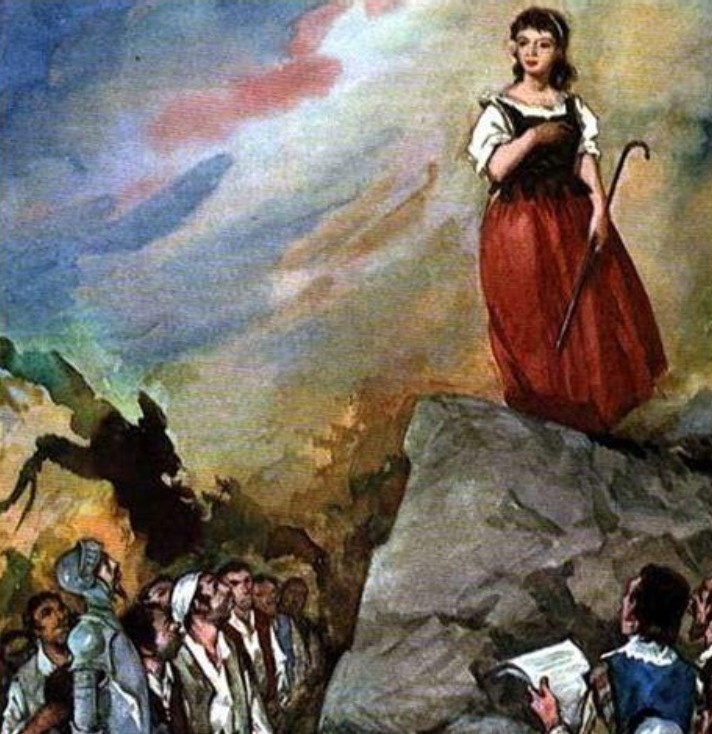
My favourite is the beautiful discourse on beauty, love and freedom delivered by the shepherdess Marcela in Chapter 14 of Part One, an extract of which I reproduce below:
“Heaven made me, as you say, beautiful, and in such a way that […] my beauty moves you to love me, and because of the love you show me, you say—and even insist—that I am obliged to love you […]; but I cannot see that, simply because one is loved, the one who is loved for her beauty should be obliged to love the one who loves her […] not all forms of beauty inspire love […] And, as I have heard it said, true love is indivisible, and must be voluntary, not forced […] for beauty in a virtuous woman is like a fire kept at a distance or like a sharp sword, neither of which burns nor cuts those who do not approach them. Honour and virtue are the adornments of the soul; without them, the body, however beautiful, ought not to appear beautiful […] I was born free, and in order to live freely I chose the solitude of the countryside […] Those whom I have enchanted with my sight I have disillusioned with my words; […] If I were to entertain him, I would be false; if I were to satisfy him, I would act against my best intentions and principles […] but let not he whom I do not promise, deceive, call or admit call me cruel or murderous. […] I, as you know, have my own wealth, and I do not covet that of others; I am free by nature, and I do not wish to be bound…”.
If only all the women in the world had the inner freedom that Cervantes put into Marcela’s words!
2.5.2. Discourse on freedom
I also wish to share the discourse on freedom delivered by Don Quixote in Chapter 58 of Part Two, an extract of which I reproduce below:
“Freedom, Sancho, is one of the most precious gifts that heaven has bestowed upon mankind; […] for freedom, just as for honour, one can and must risk one’s life […] for the obligations arising from rewards, favours and graces received are shackles that prevent the free spirit from soaring. ‘Blessed is he to whom heaven has given a crust of bread without leaving him any obligation to thank anyone but heaven itself!’”
2.5.3. A specific observation on the difficulty/impossibility of translating poetry
Finally, a specific observation with which I fully agree. In Chapter 6 of Part One, Cervantes carries out an exhaustive review of the chivalric romances in existence at that time and, in that context, reflects on the difficulty/impossibility of translating works of poetry:
“…I would have brought it to Spain and rendered it into Castilian; for that robbed it of much of its natural value, and the same will be true of all those who wish to translate books of verse into another language: however much care they take and however much skill they display, they will never reach the standard that these works possessed at their very inception.”
Whilst it is feasible to translate the meaning of a poem’s verses (its primary component), the musicality created by the sequence of words (its second and fundamental component) is very difficult (if not impossible) to translate.